The global landscape of racket sports offers a unique blend of tactical depth and accessible mechanics through the game of padel. Millions of hobbyists and competitive athletes embrace this energetic pursuit, discovering that victory requires much more than raw physical strength. Consumers stepping onto the court face an immediate need to comprehend regulations, anticipate physical movements, and acquire appropriate equipment.
By mastering foundational padel match dynamics, newcomers quickly transform initial confusion into strategic dominance. Our mission at Pick it Quick involves providing expert intelligence that streamlines athletic purchases and enhances active lifestyles. This blueprint delivers comprehensive insights into essential gear, scoring parameters, and tactical positioning. Understanding these core elements ensures that every participant competes effectively while prioritizing safety and long-term athletic development.
Understanding padel match dynamics and court dimensions
Padel distinguishes itself from traditional racket sports through a highly specialized structural environment. Competitors play strictly in a doubles format on a court measuring exactly twenty meters long by ten meters wide. A central net divides the playing surface, reaching a height of 0.88 meters in the middle and rising slightly at the outer posts. These precise dimensions force players into closer proximity, elevating the importance of rapid reflexes.
The true defining characteristic involves the surrounding enclosure, which combines glass panels and metallic mesh fencing. These imposing walls operate as active participants within the rally, offering unique rebound opportunities that dictate overall padel match dynamics. Players experiencing the court for the first time must adjust their mental approach entirely to accommodate this interactive boundary system.
Rather than striking the ball with overwhelming force to secure an immediate winner, participants must manipulate the trajectory and utilize the surrounding glass. Consistent placement and geometric calculation form the bedrock of success. Observing how the ball interacts with the physical structure helps competitors anticipate spatial shifts, turning potential defensive liabilities into strategic offensive advantages.
Mastering official rules and padel match dynamics
Securing a firm grasp of the official rulebook remains mandatory for anyone participating in competitive rallies. The scoring system directly mirrors traditional tennis, progressing from fifteen to thirty, then forty, before culminating in a game victory. Matches generally follow a best-of-three-sets format, demanding a team secure six games with a two-game margin to claim a single set.
Should competitors reach a forty-all tie, tournament regulations might dictate a standard two-point margin or invoke a decisive golden point. Service mechanics introduce a notable departure from conventional expectations. Every serve utilizes a strict underhand motion, demanding the server bounce the ball behind the service line before striking it at or below waist height.
The shot must clear the net and land exactly once inside the diagonal opponent’s service box. Striking the metallic fencing after the initial bounce results in an immediate fault, forcing players to rely on placement rather than sheer power. Active play introduces precise regulations governing the surrounding walls and fencing.
A valid stroke requires the ball to bounce precisely once on the opponent’s side before making contact with the glass or mesh. Hitting a wall directly out of the air awards the point to the opposition. For a comprehensive look at standardized regulations and historical documentation, enthusiasts can consult the International Padel Federation (FIP) to refine their understanding of the sport.
Selecting ideal equipment to support padel match dynamics
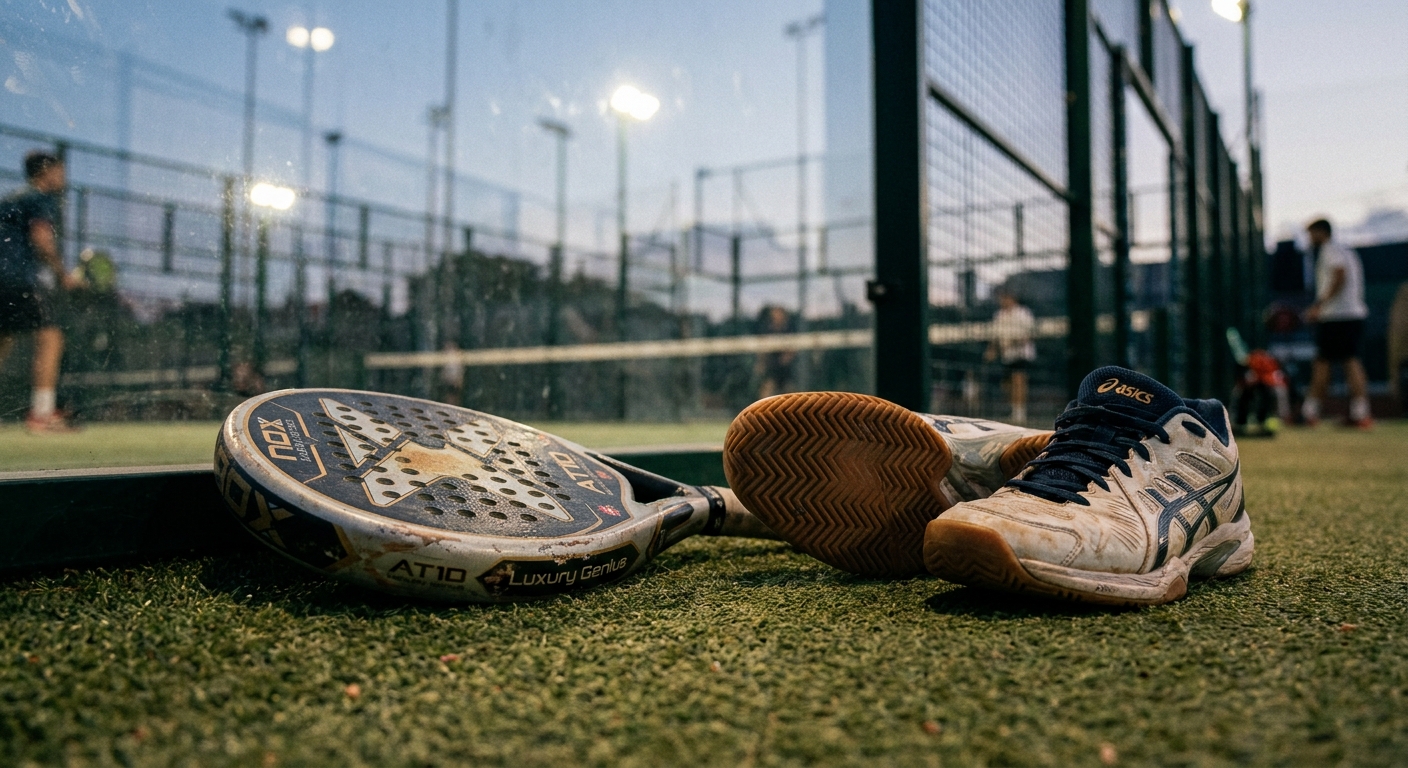
Acquiring the correct equipment represents a critical investment for consumer safety and court performance. The racket, often called a pala, consists of a solid, perforated surface encasing a soft core typically manufactured from EVA foam or rubber. Industry experts universally recommend that novices select a round-shaped racket during their formative stages of play.
This specific design maintains a low balance point, distributing the weight closer to the handle for enhanced maneuverability and immediate stroke reaction. Furthermore, round rackets feature a centralized, expanded sweet spot that provides essential built-in forgiveness during off-center strikes. Leveraging an automated buying companion streamlines the process of locating these lightweight, control-oriented models.
Softer core materials absorb ball impact effectively, reducing vibrations transferred into the arm and mitigating the risk of repetitive strain injuries. Proper footwear commands equal attention due to the intense physical demands of the sport. Competitors execute rapid lateral slides and explosive directional changes on artificial turf lightly dusted with synthetic sand.
Specialized shoes featuring herringbone or mixed sole patterns deliver necessary traction, while reinforced lateral structures prevent dangerous ankle rolls. Equipping proper footwear protects physical well-being and elevates overall movement confidence, ensuring players can chase down difficult lobs without hesitation.
Navigating padel match dynamics with synchronized movement
Mastering the physical strokes merely solves half the equation on the court. Spatial awareness and strategic positioning truly separate successful competitors from perpetual novices. Because the sport functions exclusively in pairs, synchronized movement and constant communication remain non-negotiable requirements. Partners must operate cohesively, mirroring vertical and lateral shifts across the playing surface.
This unified approach dictates core padel match dynamics and maintains impenetrable defensive formations. When one individual advances toward the net to adopt an offensive stance, the partner must join them immediately to eliminate passing lanes. Conversely, defending a deep lob requires a simultaneous retreat from both players to maintain defensive solidarity near the back glass.
Acting independently compromises the team’s structural integrity and creates glaring vulnerabilities that experienced opponents readily exploit. Participants must internalize the strict avoidance of the transition zone, commonly labeled no man’s land. Lingering midway between the baseline and the net forces competitors to hit difficult, low volleys directly at their feet.
Tactical objectives demand that players either position securely behind the service line for defensive stability or establish an aggressive stance at the net to dictate the pace of the rally. Transitioning between these distinct zones requires precise timing and coordinated execution.
Essential strategies to control padel match dynamics
Many converts migrate from other racket sports bearing ingrained habits that prove counterproductive within a glass-enclosed arena. The most prevalent error involves applying excessive power through elongated, sweeping swing paths. Within these confined dimensions, raw power frequently causes the ball to rebound aggressively off the opponent’s back glass, setting up an easy counterattack.
Focus must shift entirely toward meticulous placement, subtle spin, and unwavering consistency. Competitors optimize padel match dynamics by executing compact, punchy strokes that prioritize absolute control over sheer speed. Keeping the ball low over the net severely limits the opponent’s offensive options.
A fundamental weapon in this strategic arsenal is the lob, widely known as el globo. Unlike tennis, where the lob serves primarily as a desperate defensive measure, this high-trajectory shot forces opposing players backward in padel. Pushing defenders away from the net opens the front court for a synchronized, offensive takeover.
Patience and calculated placement will systematically deconstruct defensive formations far more effectively than pure power ever could.
Overcoming the psychological barrier presented by the back wall represents another crucial developmental milestone. Instincts often urge individuals to strike the ball before it bypasses their body, leading to rushed mechanics. Learning to trust the glass allows the wall to act as a secondary defensive partner.
This strategic rebound absorbs incoming momentum, buying valuable seconds for the player to adjust their footing and execute a measured return stroke. Embracing these unique environmental factors separates capable tacticians from easily defeated beginners.
Achieving long-term success through padel match dynamics
Engaging in this highly tactical athletic pursuit offers immense physical benefits and exceptionally rewarding social interactions. By comprehending the unique scoring framework, strict underhand service rules, and intricate geometry of the enclosure, novices seamlessly bypass early frustration. Establishing a firm intellectual grasp on these elements paves the way for rapid physical improvement.
Proper investments in forgiving, round-shaped rackets and high-traction footwear establish a stable foundation for safe, long-term athletic development. Integrating these physical and mental elements properly defines favorable padel match dynamics. Ultimate success relies heavily on mental adaptability, strategic restraint, and consistent team movement.
As partners learn to navigate the physical space synchronously and harness the strategic advantage of rebounding boundaries, their collective proficiency inevitably surges. Focusing on calculated placement rather than aggressive force transforms the imposing enclosure into a calculated advantage.
Pick it Quick remains fully dedicated to facilitating these lifestyle enhancements through expertly curated insights and interactive guidance. Navigating complex purchasing decisions requires reliable intelligence to ensure optimal outcomes. Embrace the foundational strategies detailed throughout this guide, secure the necessary functional gear, and step onto the court fully prepared to execute a winning game plan.